Benefits of Classical Pilates: How It Transformed My Teaching Journey
My foremost goal when I enrolled in Pilates teacher training was not to become a teacher. What I really wanted was to relieve my pain. At 26, I was suffering from frequent tension migraines and chronic pain in my neck and upper back from a combination of old ballet injuries and more recent whiplash from a car accident. I had only dabbled in Pilates during my ballet career, but my intuition told me that this was the thing I needed. But by the time I had completed my 500-hour comprehensive teacher training, which took about a year, I had not experienced much pain relief at all and I was beginning to wonder if I had been wrong about Pilates. As fate would have it, I dropped into a new studio on ClassPass that would change the trajectory of my teaching career forever.
Gatekeeping in Pilates
Pilates may be experiencing a surge in popularity right now, but reformer Pilates has been ubiquitous on the West Coast for some time. Back in 2017/2018 when I was considering becoming a Pilates teacher, the one teacher I knew and worked out with somewhat discouraged me, explaining that it just wasn’t worth it for how little money I would make because the market was so saturated. That was enough for me to table the idea for a while, but after my car accident, my chronic pain really started to impact my life. I was too weak to carry grocery bags and tension migraines would sideline me from normal life for days at a time.
When I finally decided that I DID want to become a Pilates teacher, I tried out a few different studios that listed teacher training on their websites. Unfortunately, I encountered a mix of unwelcoming environments and workouts that I didn’t enjoy, but I also didn’t really know what I was looking for. By this time, I was working in fitness—at the front desk of a popular spin studio where a couple of instructors also taught Pilates. I tried asking for advice but got only vague answers.
“A training is a training.”
“I had a (unnamed) mentor.”
“The market is too saturated.”
Contemporary Pilates Training
Despite the lack of clarity and guidance I received, I remained committed to studying Pilates because I just knew it was what my body needed to feel strong again. So when a popular franchise studio opened up down the road from my house and around the corner from my spin studio job, I jumped at the opportunity to sign up for their inaugural 500-hour comprehensive Pilates teacher training.
It felt aligned and I was ready to jump in head first. I began taking classes regularly and noted that I enjoyed some of the teachers’ classes more than others, but figured it was just a mix of style and skill. I was too excited about my own training to view this as a red flag.
As soon as the training started, I knew something was off, but I had already committed over $6,000 for the tuition; I was locked in. What had been promised as an intimate group with a master trainer turned out to be a group of 18 people with varying levels of experience in fitness or leading a room of people.
The first weekend of training focused on mat Pilates and, to my surprise, despite certain exercises being in our manual, the master trainer skimmed over them, explaining, “You won’t really ever teach those.” I remember thinking that was odd, but things were moving quickly.
There were 12 reformers in the studio, so the pacing of the learning was skewed and the amount of time spent on rehashing material was incredibly frustrating. By the time we were covering exercises on the reformer, I was looking for clarity. My background as a ballet dancer made me finely attuned to how movements should be executed, but I was starting to feel a little lost in the new verbiage of Pilates. To my dismay, when I inquired about the intent of certain exercises, where they should be felt, and why we would teach them, I was met with underwhelming answers that didn’t really explain anything at all.
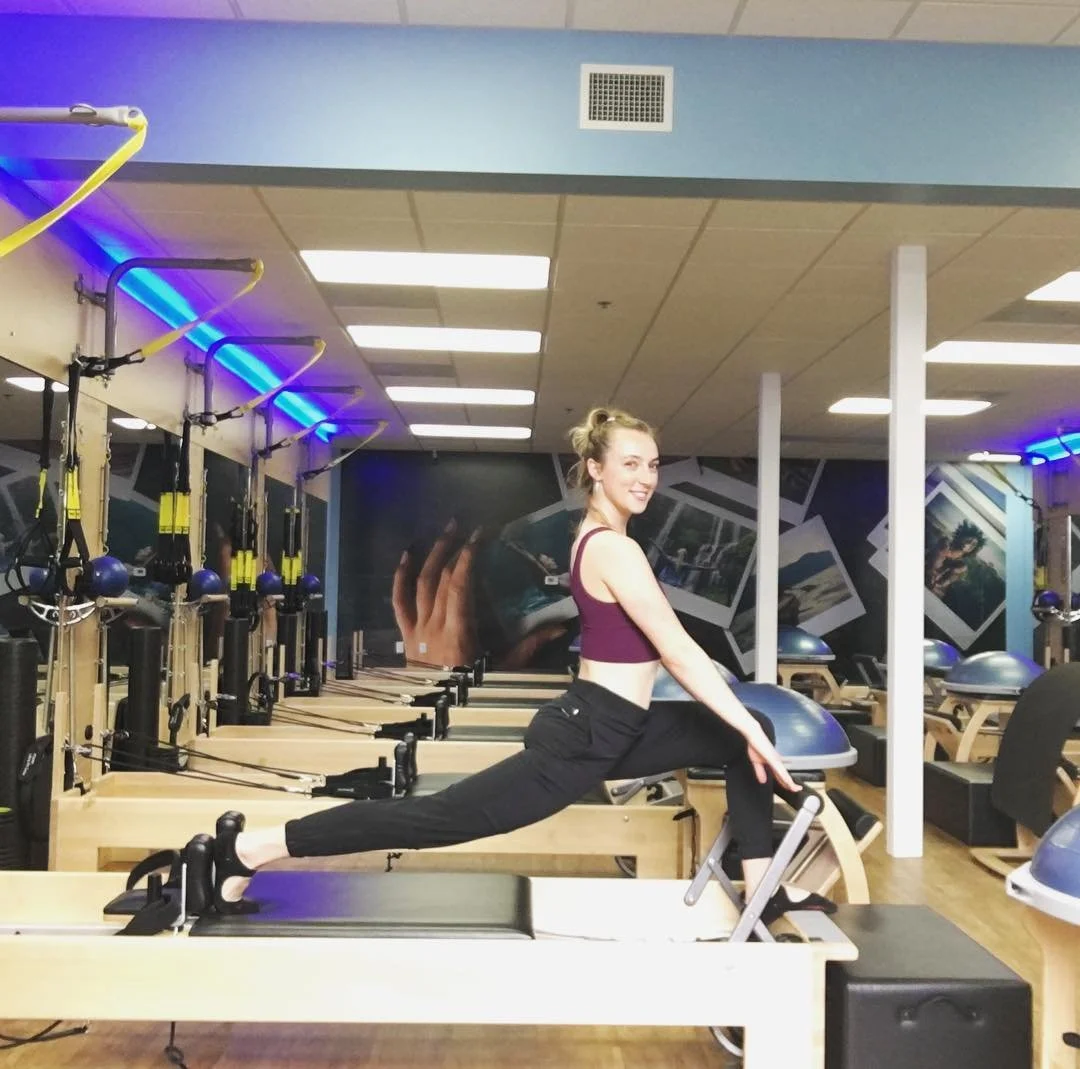
Something’s Missing in Contemporary Methods
Despite the shortcomings of my chosen teacher training, I was not about to give up. Healing and feeling strong was too important to me, so I put in the work, even traveling to other studios where I knew there were solid teachers to observe and learn from them.
I was flattered to be offered a position with my own classes on the schedule before I had even tested out of the training program. While I still was unsure if I even wanted to teach Pilates, it seemed like a good way to get more comfortable with what I was learning and recoup some of the money I had invested in training.
Once I began teaching classes, I realized how lost I actually was. I was taught to creatively program classes that include all ranges of movement—flexion, extension, side-bending, and rotation—in a block format that was level-appropriate. This seemed fun in theory. I would spend time in the studio coming up with flows and writing them down, feeling prepared for my next block of classes.
I learned the hard way that my plans would inevitably unravel. While the classes at this studio were leveled, there would almost always be a mixed bag of clients that showed up with ailments and injuries that impeded how they could move…
“I have to keep my head down.”
“I can’t kneel.”
“I’m 6 months pregnant.”
“I can’t put weight on my wrists.”
Cue my panic as I realized 3 minutes before class that my planned flow is completely inappropriate for the people that showed up. Did I always make it work? Yes. Did I feel successful as a Pilates teacher? Not really.
Add to that the fact that I was STILL experiencing tension migraines regularly and had not experienced a marked improvement in my pain or strength levels. At that point, my chiropractor was single-handedly keeping me functioning.
Classical Pilates Training
In between the classes that I was teaching for the franchise I trained with, I started dropping into random Pilates classes I found on ClassPass. The first class I tried was a mid-day class specifically for Pilates teachers, and while I could keep up, I had the sense that everyone else in the room knew something I didn’t.
Jennie, the teacher and studio owner, was kind and attentive, giving me corrections that I had been craving for over a year by that point. I couldn’t wait to come back.
I learned that Jennie and her teachers taught classical Pilates, rooted in the system created by Joseph Pilates nearly a hundred years ago. Jennie, a second-generation teacher, had trained with Lolita San Miguel, one of Mr. Pilates’ original students. They hung orders of exercises for the mat AND reformer up for both teachers and clients to reference, and yet every class was as eye-opening and challenging as the last.
On my third visit, I learned Rowing 1 on the reformer. The choreography of the exercise went over my head, but the benefit of the movement to my problem area—my shoulder girdle and neck—was unbelievable. This was what I had been searching for all this time!
Jennie could see that I was craving more when she offered me an opportunity to become her mentee, and I jumped at the opportunity (soon realizing I had discovered the unnamed mentor). I dove headfirst into an intense six months of relearning Pilates, taking class, observing, and practice teaching.
We started by breaking down the mat Pilates order exercise by exercise, skipping none. I felt like Russell Crowe in A Beautiful Mind; every exercise was every exercise, the only difference was whether it was performed on the mat, reformer, tower, Cadillac, chair, Ped-o-Pull, or spine corrector. I finally was beginning to understand what exactly Pilates was and how to teach it.
Confidence and Clarity from Classical Pilates
During my mentorship, I was still teaching for the franchise I trained with. Jennie challenged me to stop planning my classes, instead relying on the system of Pilates to accommodate the needs of my group classes.
The confidence shift was undeniable. When you follow the system of Pilates, not only does the intensity of movement naturally progress, you also inherently include all ranges of movement—flexion, extension, side-bending, and rotation. Heavier spring tensions challenge you to initiate movement from your core powerhouse muscles. Muscle memory and coordination is built, and clients progress and get stronger.
Once I finished out the term of my mentorship, I was offered a teaching position at Jennie’s studio, which was a dream come true. Every day I entered that studio was an opportunity to learn something new, not only from Jennie, but also from her staff of skilled teachers and visiting workshop presenters. Thanks to her, I have learned from teachers in various lineages from Romana to Jay Grimes to Kathy Grant, all of it enriching my teaching skills.
I stopped feeling like I needed to impress my classes with complicated, performative flows. I started relying on the framework of Pilates and adjusting to meet the needs of the bodies in front of me. Every movement I cue must support the overall WHY of Pilates—complete coordination of mind, body, and spirit. It didn’t matter if clients showed up with unforeseen ailments because I knew how to deftly progress through a full-body workout with variations, modifications, and props that make the workout accessible to everyone in the room.
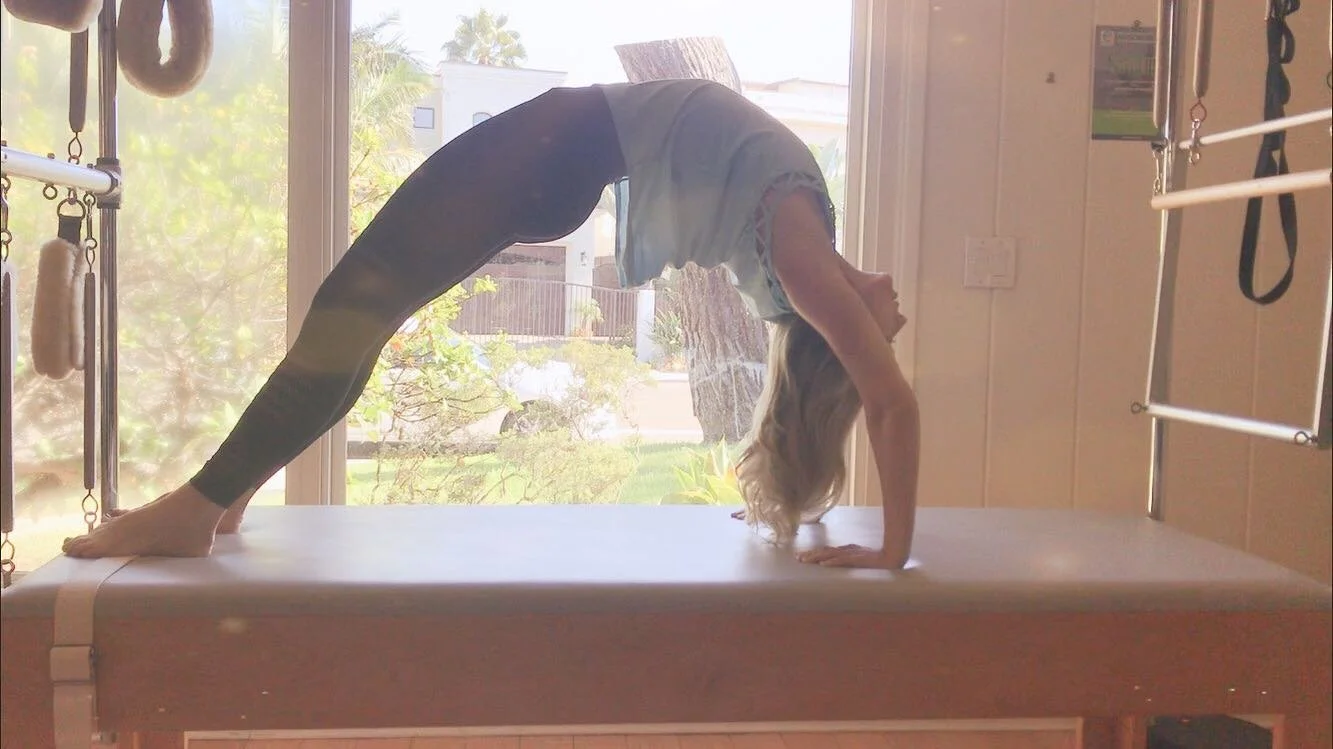
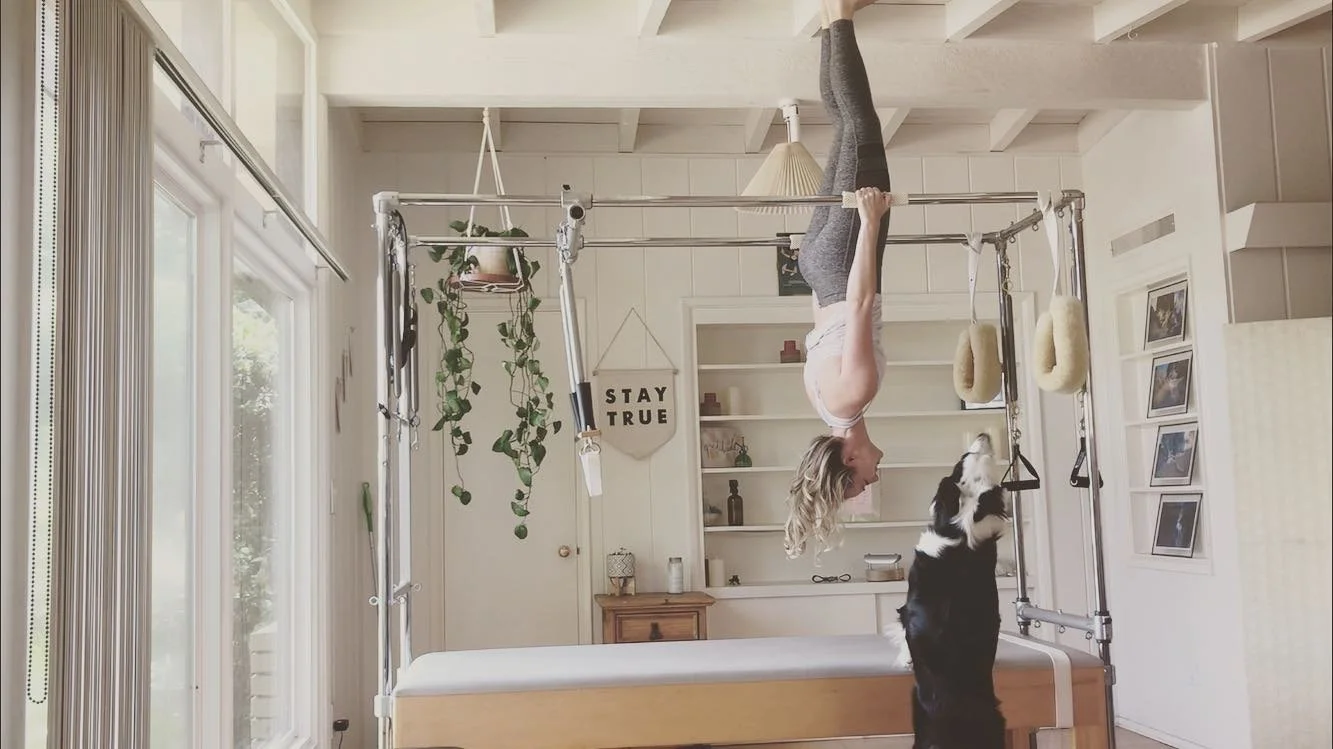
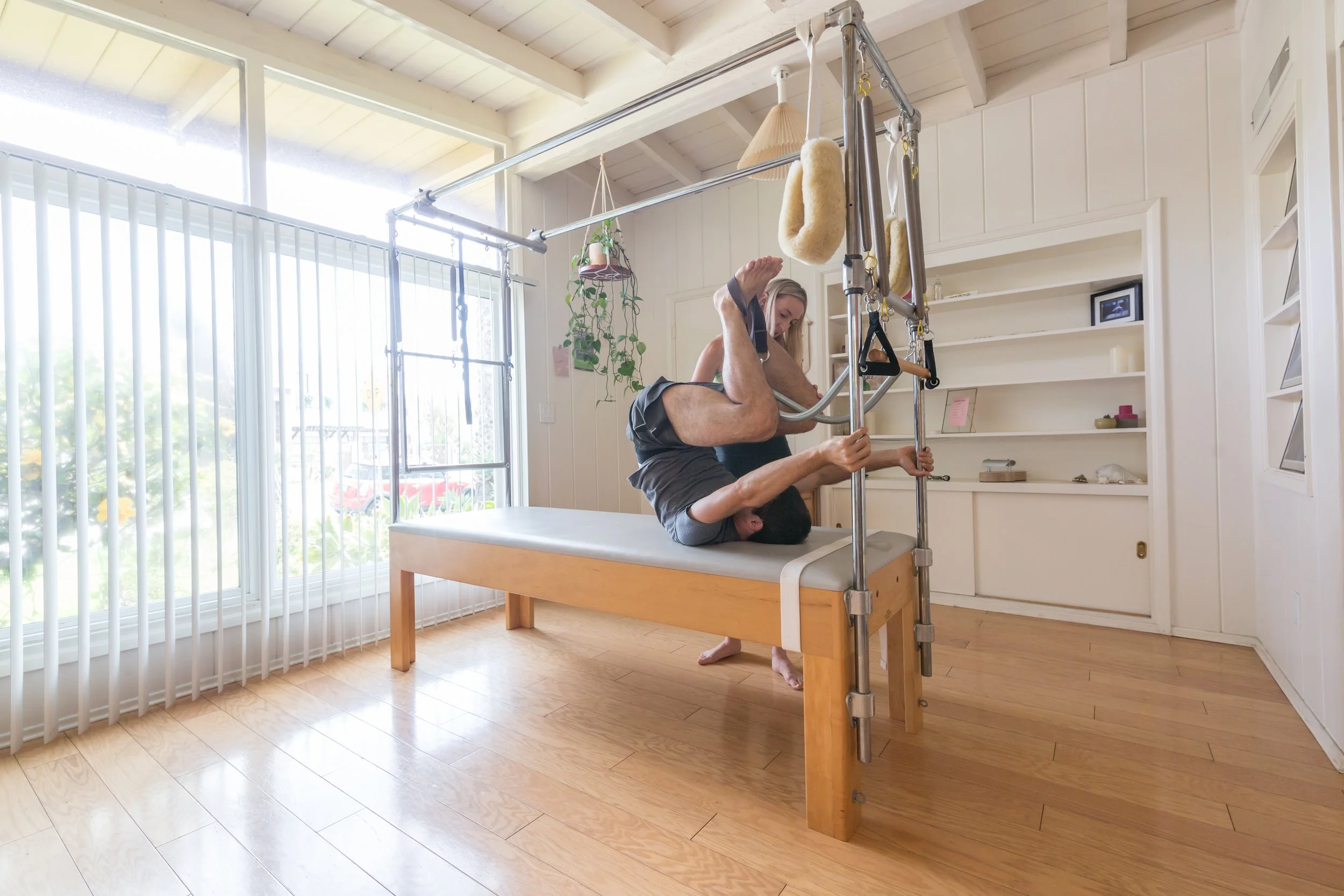
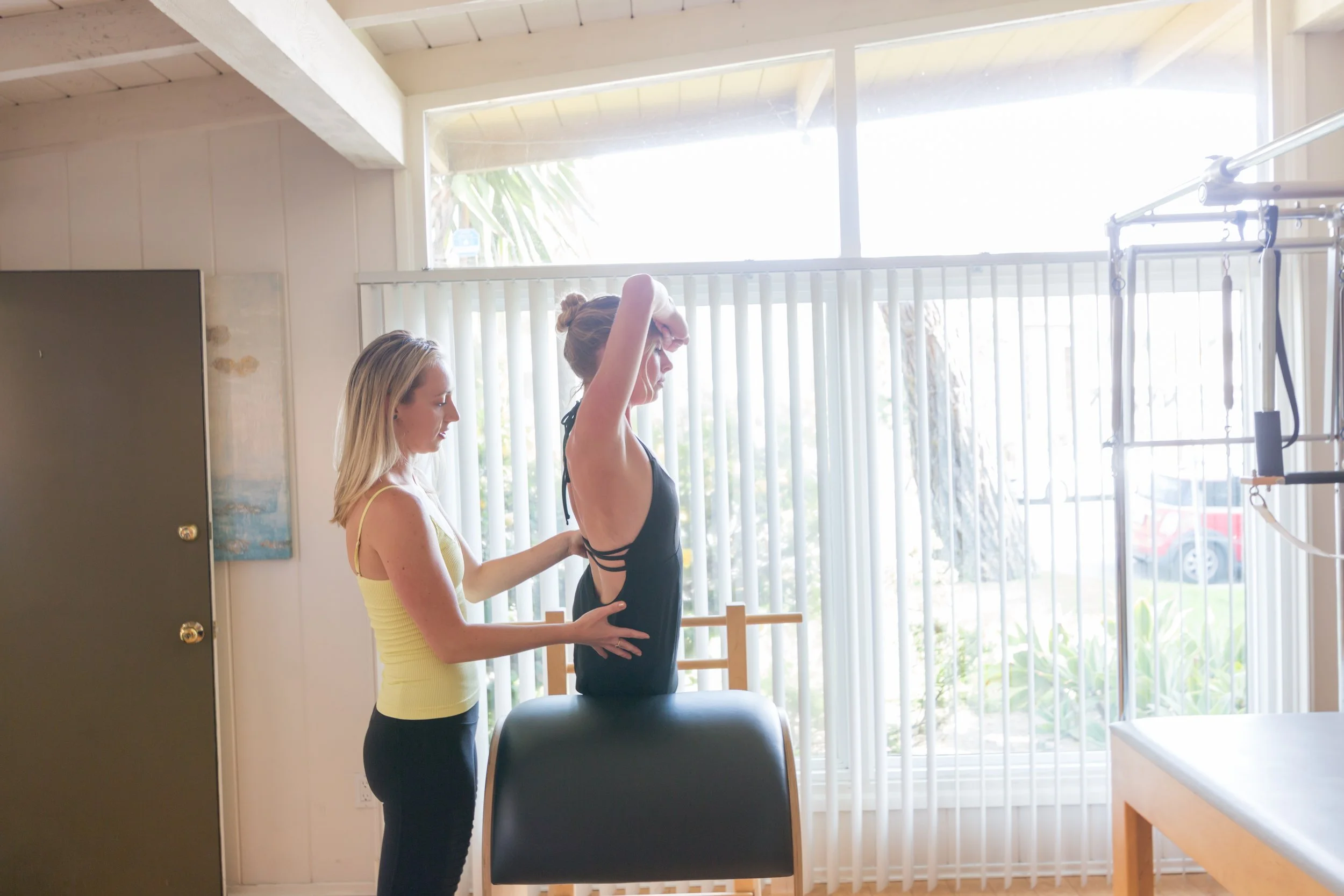
Paying It Forward with Classical Pilates Benefits
By the time I finished my mentorship training, Jennie suggested that I would be effective at helping bridge other teachers from contemporary to classical Pilates. I was flattered but didn’t feel THAT confident yet, so I filed the thought away.
Since then, I have had the privilege of teaching in Pilates studios across the country, some classical, some contemporary, even writing the mat training manual and editing the reformer manual for one studio. Each and every time, I stay true to my passion for classical Pilates, and without fail, client feedback is overwhelmingly positive.
“I never understood how to use my core in Pilates before!”
“My plantar fasciitis is practically non-existent!”
“I feel so comfortable and welcomed as a Pilates newbie. She explains each movement in a patient and encouraging way!”
One thing has remained clear to me through all my teaching experience: a solid understanding of the system of Pilates makes for a confident, intelligent, effective teacher. I know all too well what it feels like to be foisted into this industry ill-equipped to perform the job well.
My goal is to be a resource. I will not gatekeep what it takes to become the best Pilates teacher because all that does is waste your precious resources of time and money. My best advice is to never stop being a student. The best teachers continue to learn for their own well-being and for the inspiration it injects into their own teaching. Whether you want eyes on your own practice, to learn the system, or advice on what step to take next, I’m here to help you bridge the gap.
If you're interested in experiencing the classical Pilates difference, join me this May in Mexico for the Classical Pilates & Whale Shark Snorkeling Retreat—it's a unique opportunity to immerse yourself in mat Pilates and discover how the power of the system and repetition drives true transformation.