How Cervical Mucus Can Help You Identify Your Fertile Window (Even Without Apps or Devices)
Using fertility awareness methods to naturally monitor your fertility—whether you want to prevent or achieve pregnancy—has never been more accessible. Thanks to social media education and innovative femtech tools, more women are learning to work with their bodies instead of against their cycle.
While apps and devices are incredibly helpful, the foundation of effective fertility awareness still comes from understanding your body’s own biomarkers. Among basal body temperature, LH testing, and cervical mucus, only one gives you real-time insight into your fertile window: cervical mucus.
Why Cervical Mucus Is the Most Reliable Biomarker
Basal body temperature (BBT) only confirms ovulation after it has happened. You’ll notice a 0.5–1°F rise in temperature once you enter the luteal phase.
LH testing (ovulation predictor kits) detects the luteinizing hormone surge that typically happens 24–36 hours before ovulation. However, results can be tricky to read, and false positives or negatives are common.
Cervical mucus, on the other hand, is a direct reflection of your changing hormones—especially estrogen. As estrogen rises leading up to ovulation, your cervical mucus becomes thinner, more fluid, stretchy, and slippery. This creates the perfect environment for sperm to survive up to 5 days and swim easily toward an egg.
This makes cervical mucus the most accurate, real-time indicator of your fertile window symptoms and overall fertility status.
Understanding Cervical Mucus Throughout Your Cycle
Your cervical mucus during your cycle changes in predictable ways as your hormones shift. Learning to recognize these changes helps you confidently identify your fertile window, cervical mucus when fertile, and the transition into the non-fertile phases.
Here’s how cervical mucus typically evolves:
1. After Your Period / Pre-Ovulatory Phase (Low Estrogen)
Right after menstruation, many women experience a few days of dryness or very minimal, sticky discharge. This is often leftover progesterone from the previous cycle keeping things dry and creating a natural antimicrobial barrier (sometimes called G-type mucus).
This phase is called the pre-ovulatory phase and lasts until your Point of Change (POC).
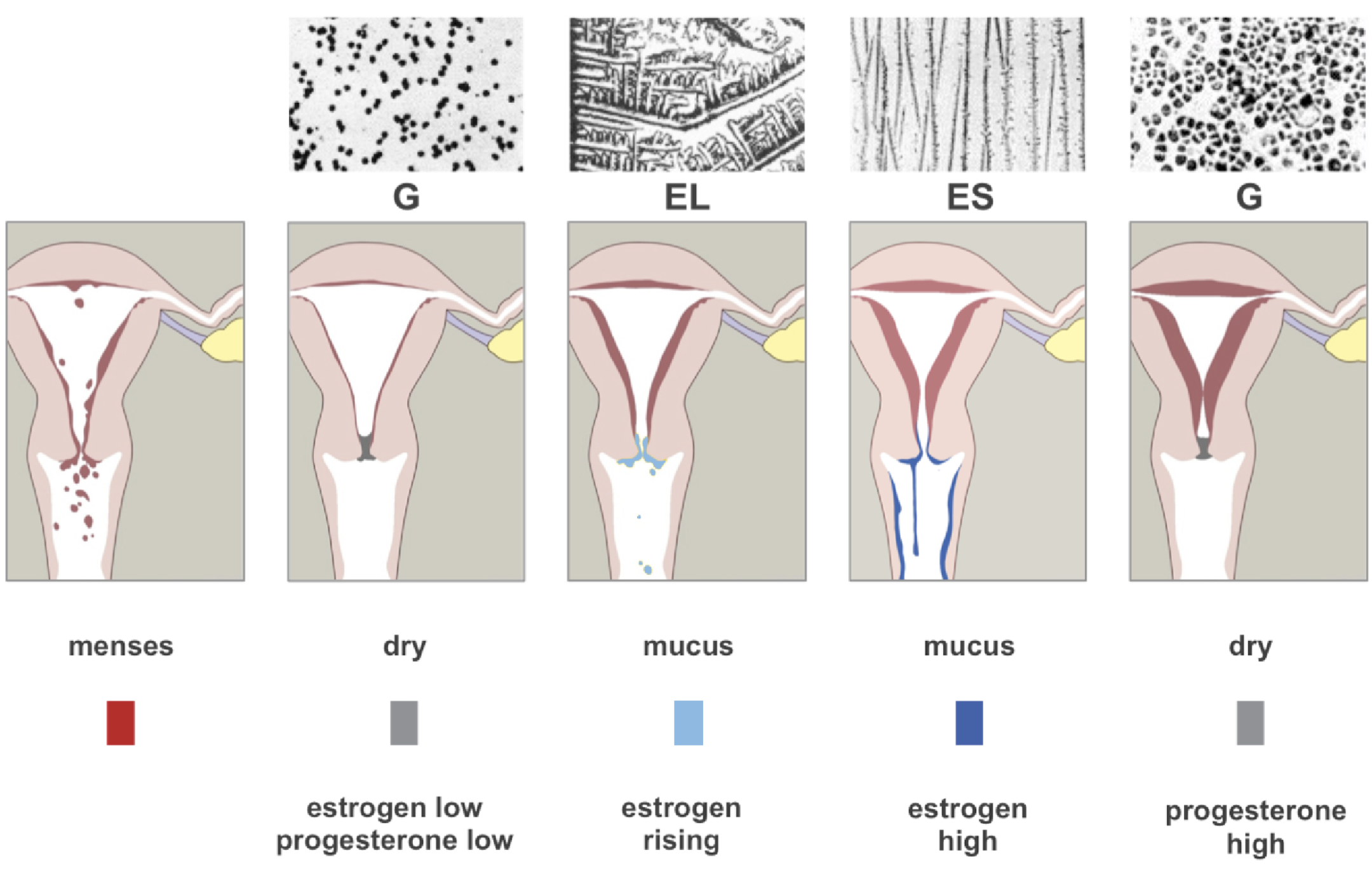
The structure of your cervical mucus changes drastically with the rise and fall of estrogen.
2. Point of Change (POC) – The Start of Your Fertile Window
Your Point of Change is the exciting moment when your cervical mucus shifts from dry or sticky to moist and more estrogenic.
As a developing follicle produces more estrogen, your mucus becomes progressively thinner, clearer, and more fluid. This is your body’s signal that your fertile window is opening.
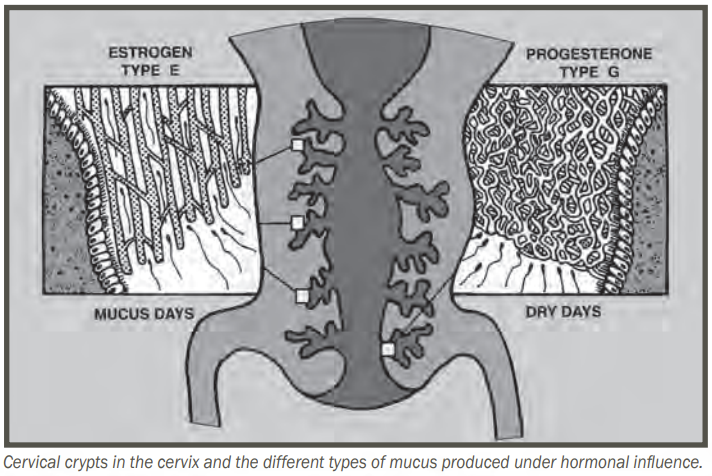
Your POC (point of change) marks a shift from type G mucus (right) to type E mucus (left). You can see how type E mucus creates a ‘highway’ for the sperm to reach the egg.
3. Cervical Mucus During Ovulation (Peak Fertility)
As estrogen reaches its highest levels (often coinciding with the LH surge), your cervical mucus during ovulation becomes its most fertile:
Stretchy
Clear or egg-white-like
Slippery or watery
This high-quality “ES” (estrogen surge) mucus is what sperm love most. You’ll typically see 5–6 days of increasingly fertile mucus, with at least 2–3 days of peak-quality stretchy, slippery mucus in a healthy cycle. This is your prime fertile window.
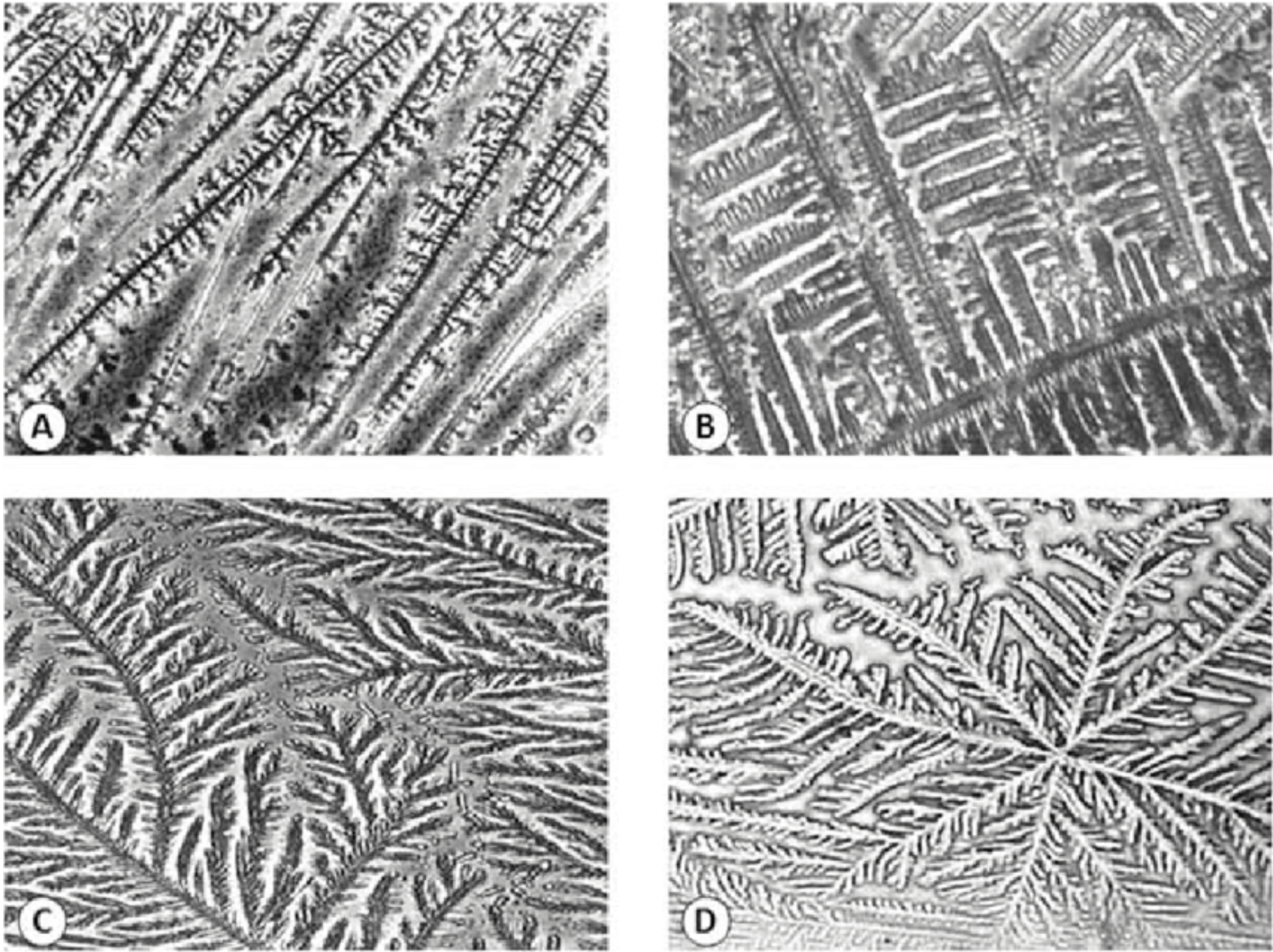
The structure of fertile mucus under a microscope could be compared to snowflakes, no two are alike. Pictured are four different specimens of fertile mucus from Your Cervical Mucus is Beautiful.
4. Cervical Mucus After Ovulation & Before Your Period
Once ovulation occurs, progesterone rises and takes over. Your cervical mucus after ovulation quickly dries up and becomes thick, sticky, or absent again (returning to G-type mucus).
This creates a dense barrier that protects the uterus. The post-ovulatory phase lasts from about 4 days after your Peak Day until your next period.
If no pregnancy occurs, progesterone drops, the lining sheds, and your cycle begins again.
Quick reference summary of cervical mucus changes:
Before period & right after: Dry, sticky, or minimal (non-fertile)
Approaching ovulation (POC onward): Moist → creamy → thin, stretchy, slippery (cervical mucus when fertile)
Peak fertile window: Egg-white, stretchy, slippery mucus
After ovulation: Returns to dry or sticky
Many women find it helpful to track these observations on a cervical mucus chart (paper or app) so they can see their personal pattern over time.
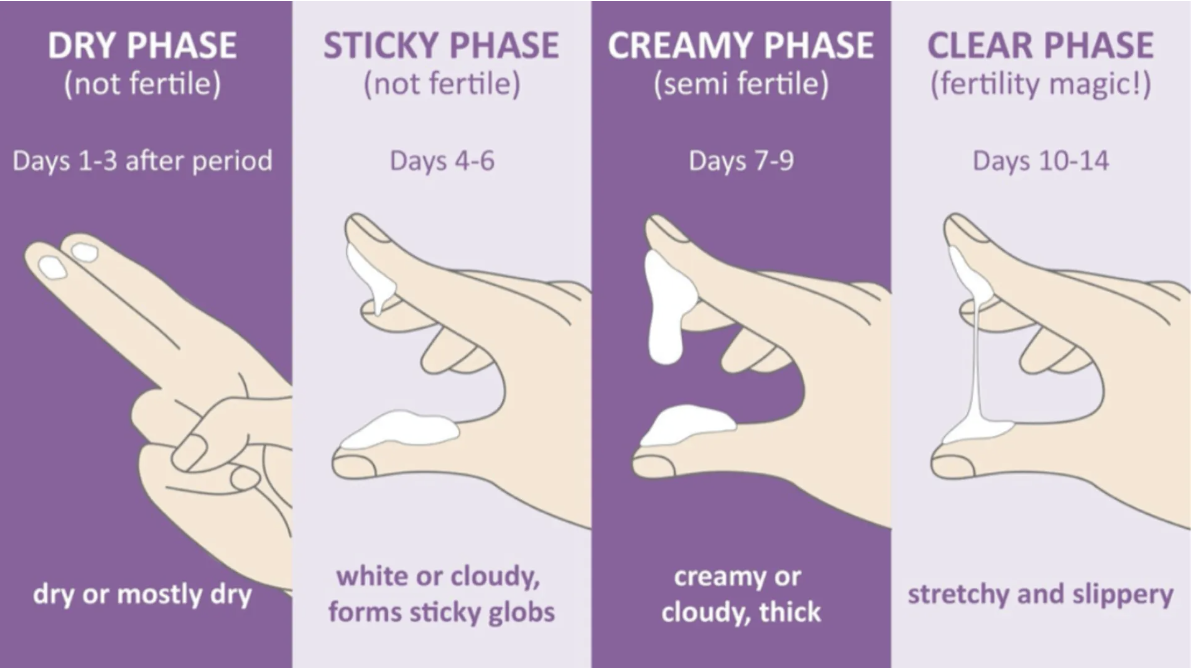
What your cervical mucus actually looks like throughout your cycle thanks to Dr. Liza Klassen, ND.
Make Cervical Mucus Tracking Even Easier and More Accurate
Observing cervical mucus manually is powerful and free, but it can feel uncertain at first—especially if you’re new to fertility awareness methods.
That’s where Kegg comes in.
Kegg is a smart fertility tracker that measures the electrical properties of your cervical mucus internally and gives you a clear numerical reading of your daily fertility status. No more guessing whether your mucus is “fertile enough.” You get objective data that takes the stress out of identifying your fertile window.
Kegg also doubles as a pelvic floor trainer with gentle Kegel exercise cues—perfect habit stacking for better pelvic health.
I personally love the peace of mind Kegg provides while my goal is to prevent pregnancy and improve my egg quality. It has truly transformed how confidently I practice fertility awareness.
👉 Ready to take the guesswork out of your fertile window?
Use my code SPRINGTOLIFEMETHOD for $20 off your Kegg device.
You’ll also get a 6-month pregnancy guarantee and access to their 30-day conception success program.
Final Thoughts
Whether you choose to track cervical mucus manually with a cervical mucus chart or combine it with a device like Kegg, learning to read your body’s signals is incredibly empowering. Understanding cervical mucus during your cycle, cervical mucus after ovulation, and your unique fertile window symptoms puts you back in control of your reproductive health—naturally.
Have you started noticing patterns in your cervical mucus yet? Drop a comment below—I’d love to hear about your experience!